|
|
Home » Where We Work » Ethiopia
Ethiopia
 Last updated June 25, 2008:
Facts on Ethiopia: • Population: 78,254,090 • 85% of the population lives in rural areas • Economy largely dependent on agriculture • 1 in 10 children will die before their fifth birthday • 2/3 of children are malnourished
Current Situation:
Cyclical natural disasters such as droughts, floods and insect infestations regularly pose threats to the livelihoods of rural populations in Ethiopia. Currently, around 85% of the population of Ethiopia lives in rural areas.
In 2007, the number of people needing emergency assistance was estimated at 1.36 million. But by mid 2007, the number of needy beneficiaries shot up due to poor rainfall, increasing food prices and plummeting animal sales. By this year, 4.5 million people across four regions remain in need of humanitarian assistance.
Regions in Need: • Southern Nations • Somali Region • Parts of Amhara • Parts of ORomia
Poor Rainfall:
Poor rainfall has created an abnormal migration of people from different districts. Thousands of animals migrated from the Gedo region to the Somali region, overgrazing the limited land space and depleting water sources in the area.
The lack of rain and depleted water sources leave communities with little water. If rains do not come soon, it is expected that weaker species of animals, such as cattle, will begin to die.
Livestock assets form the basic means of livelihoods for many communities. Their depletion will have severe impacts on livelihoods. Families will either have to move from rural areas to more urban ones, or remain in their communities but will be unable to feed themselves.
Crop Conditions:
Prices of imported food items and locally grown cereals have already skyrocketed due to poor harvests and soaring global food prices. The failure of expected rainfall has left minimal prospects for harvests. This will further exacerbate the already declining availability of cereals and increase food prices.
Food Price Increases from March 2008 to May 2008:
Price of Food | Months | (per 50kg unit) | March 2008 | April 2008 | May 2008 | Rice | $ 36 | $ 49 | $ 67 | Maize | $ 26 | $ 26 | $ 33 | Sorghum | $ 21 | $ 22 | $ 29 | Sugar | $ 29 | $ 32 | $ 35 |
To cope with this situation, many households have begun reducing the number of meals from three to two and the amount of food given at any one meal. The reduction in quantity and quality of food consumed will create malnourishment among the elderly and children in the community.
With assistance from world partners such as ECHO and UNICEF, Islamic Relief is currently operating a Nutrition Improvement Project to benefit more than 2,700 beneficiaries with nutritional supplements and medical care for malnourished women and children.
Islamic Relief’s Response:
With assistance from world partners such as ECHO and UNICEF, Islamic Relief is currently operating a Nutrition Improvement Project which benefits up to 2,700 people and provides the following:
• Community awareness and mobilization • Screening and treatment for malnourished women and children • Supplementary food and nutrition
Future projects Islamic Relief plans to implement include:
• Emergency Water Supply Project • Livestock Recovery project • Drought Emergency Response
Islamic Relief in Ethiopia:
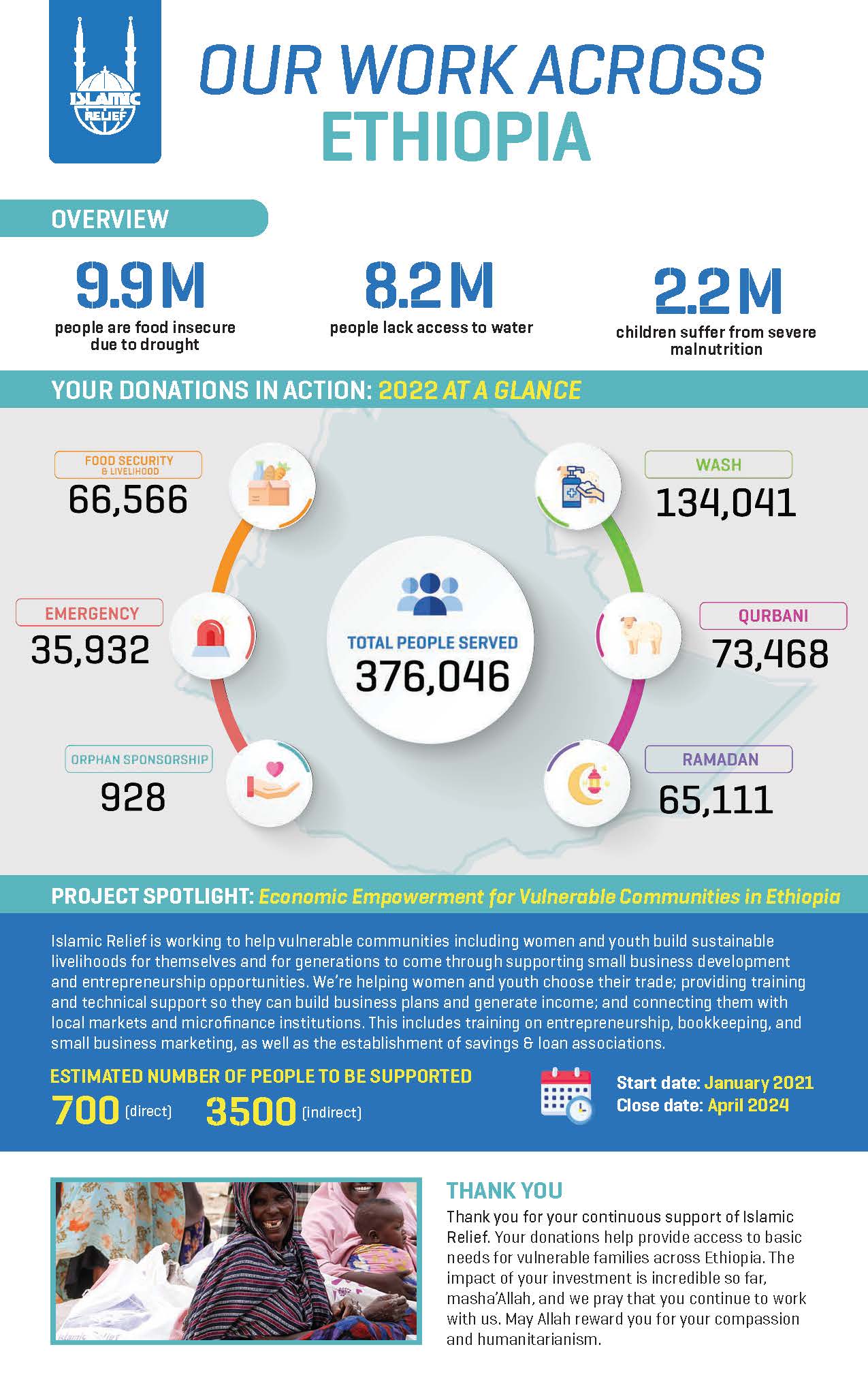
Islamic Relief opened its office in Ethiopia in January 2004 and works with local communities to improve education, health provision, and water and sanitation.
|
|
| Zakah Calculator |
|
|
| Islamic Relief USA |
|
|
A 501 (c)(3) nonprofit organization (Tax ID# 95-4453134)
|
|
|
|
|
| Copyright July, 2009 Islamic Relief USA | |
|