can provide essential food aid to a family
can deliver hygiene and water storage kits for a displaced family in Afghanistan
can provide a family with emergency shelter
Enter Amount
Four major earthquakes, each of a magnitude between 4.7 and 6.3, have hit the Herat region since October 7. Over 2,000 people have died; thousands of people have been injured; and more than 3,000 homes have been completely destroyed, leaving people homeless. The number of people directly affected has risen to more than 40,000.
“The people of Afghanistan have already been through so much suffering. This earthquake is now a double calamity for many families who urgently need our support. We are appealing for as much financial assistance to help those affected by this disaster. Many people have lost loved ones, and many [are] injured. Their needs will be huge in the days to come.” – Umair Hasan, Islamic Relief Afghanistan Country Director
Islamic Relief is working with local partners to provide emergency relief and promote long-term recovery. The initial emergency response includes cash assistance for food and other basic needs; essential non-food items including hygiene kits; and transitional shelter and rental assistance.
Early recovery goals include construction of shelters; rehabilitation of water sources and construction of latrines; cash-for-work opportunities to repair community infrastructure; skill-based training and promotion of income-generating activities; and formation of community self-help groups (SHG’s). Our goal is to help restore hope and dignity to families in Afghanistan as they rebuild their homes and communities.
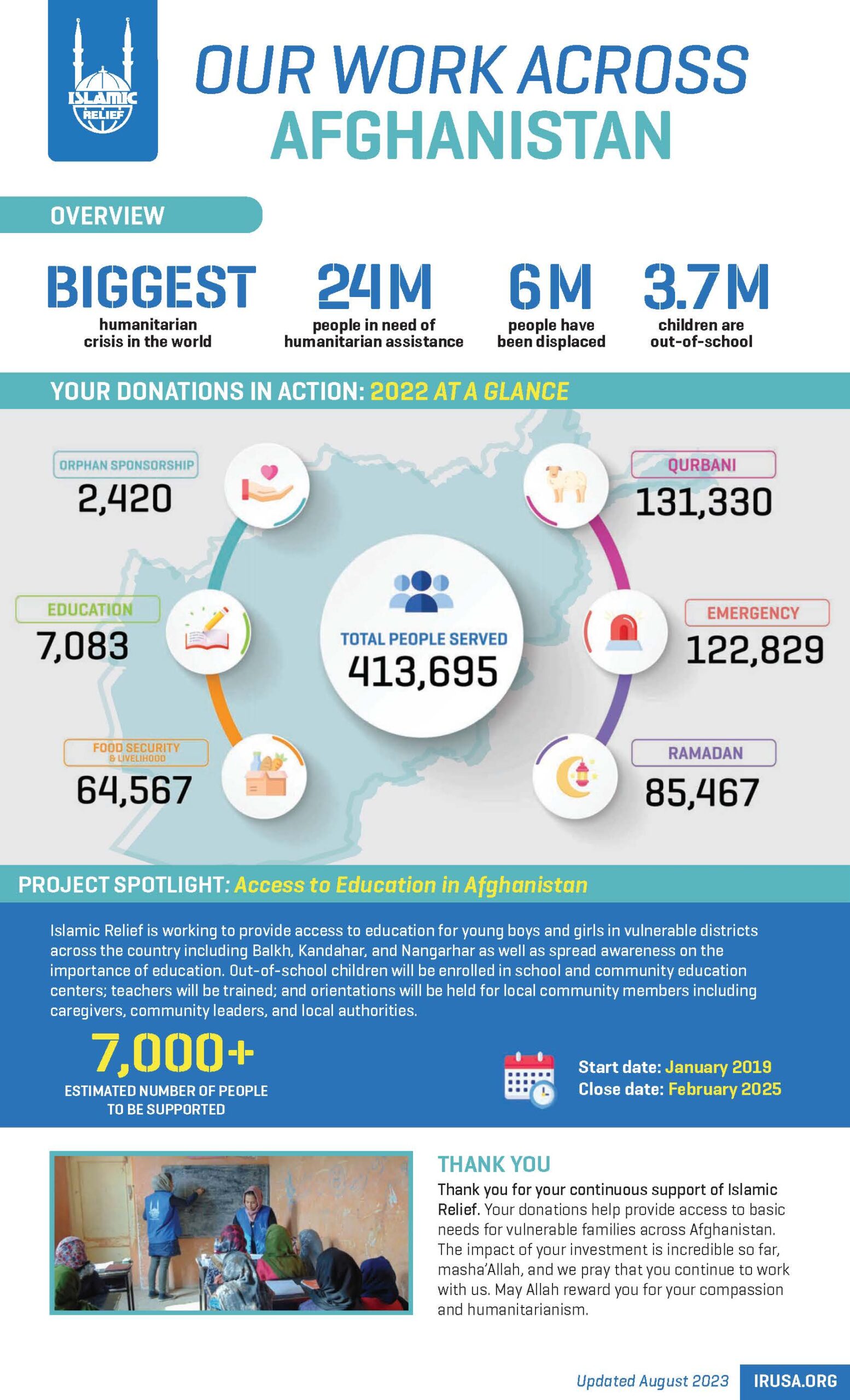
Afghanistan’s refugee crisis is one of the biggest humanitarian crises our world has faced. More than four decades of conflict, instability, and ensuing chronic poverty has left an estimated 24 million Afghans in dire need of humanitarian assistance and driven more than 6 million people out of their homes. Women and children are among those most affected – they make up 80% of newly displaced Afghans. The fundamental rights of women and young girls are under threat and more and more children are out of school each day.
Islamic Relief has made a commitment of $2.1 million to help both families across Afghanistan and the 83,000 refugees newly arrived in the US.
Together, with our regional offices in Kabul, Balkh, Herat, and Nangarhar, we are working to help provide those in need with the following:
We are also teaming up with our partner network to help our new Afghan neighbors transition into their new homes through the following:
Click below to take action today, whether it’s through advocating for the Afghan Adjustment Act or sponsoring a newly arrived Afghan family. Stay tuned to this page for more information as it becomes available to us.
Islamic Relief has served the Afghan community for more than 20 years, and continues to provide humanitarian and development assistance today. Through our regional offices and partner network across the US, we are able to quickly and accurately assess the needs on the ground and provide immediate relief. We work hard to ensure your donor dollar goes as far as possible.
In addition to our most recent efforts, a few of our ongoing projects include: